Virtual Reality NEWS: Hardware, Platforms, and Breakthroughs
Virtual reality has not had a single “big bang” moment since November, but it has seen steady, meaningful progress in hardware, platforms, and next‑gen display ideas. The overall trend is clear: lighter headsets, sharper visuals, and deeper mixed‑reality integration are shaping the next chapter of VR.
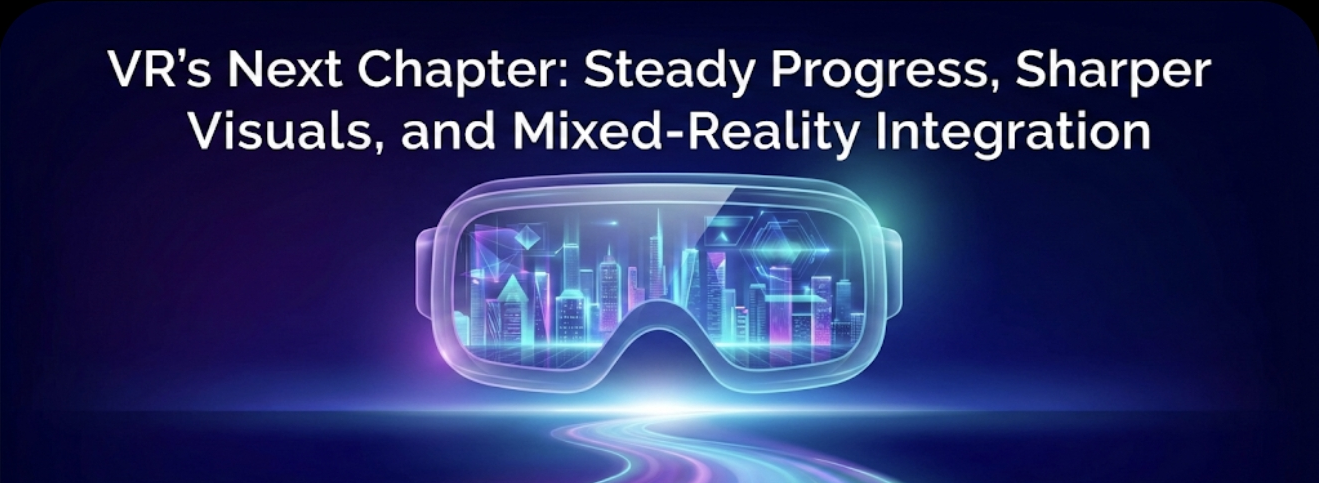
Over the past weeks, most of the excitement around VR hardware has centered on display quality, comfort, and the slow move toward more compact designs. Instead of wild new form factors, companies and enthusiasts are focused on upgrading the core experience inside the headset.
- Higher‑resolution screens and better optics are becoming the main selling points of upcoming devices, with panels that greatly reduce visible pixels and improve text clarity.
- OLED panels stand out for their deep blacks and strong contrast, which make virtual environments feel more vivid and less “washed out” than older LCD‑based headsets.
- Early concepts and prototypes for ultra‑high‑resolution “8K‑class” VR promise a big leap in visual fidelity once these ideas become mainstream hardware.
On the software and platform side, the story since November is one of refinement rather than revolution. Major platforms are iterating quickly, polishing features and improving how VR fits into everyday gaming and productivity.
- Standalone headsets continue to dominate attention, as frequent system updates improve tracking stability, performance, and comfort‑oriented options like better guardian systems and settings.
- Mixed‑reality features—using passthrough video to blend the real world with virtual elements—are becoming more central, moving VR devices closer to flexible “all‑in‑one” spatial computing platforms.
- Developer‑facing updates, SDK changes, and firmware tweaks are quietly making it easier to build richer, room‑scale apps that use the environment more intelligently.
When people talk about “breakthroughs” in VR right now, they are usually referring to direction rather than a single, finished product. The breakthroughs are the visible momentum in displays, optics, and immersion that hint at what next‑generation headsets will feel like.
- Ultra‑sharp displays are the headline idea: pushing toward resolutions where text, cockpit instruments, or design tools look almost monitor‑level instead of “VR fuzzy.”
- Work on slimmer, lighter headsets aims to make long sessions more comfortable, reducing the gap between a chunky VR visor and something closer to everyday wearable tech.
- As mixed reality improves, VR is slowly evolving into a device you might use for more than just games—creative work, virtual desktops, and hybrid real/virtual experiences are becoming more realistic use cases.
Taken together, the developments since November paint VR as a maturing space rather than a fad. The wild experimental phase is giving way to a more polished, practical, and visually impressive generation of devices and platforms.
- Hardware is moving toward better visuals and comfort, making VR less of a novelty and more of a serious medium for games, simulation, and work.
- Platform updates are steadily improving stability and usability, which matters just as much as raw specs for long‑term adoption.
- The breakthroughs to watch are not one‑off gadgets, but the convergence of higher‑resolution displays, lighter designs, and smarter mixed‑reality software.
___
Quest ReQuest VR
https://linktr.ee/questrequestvr
The State of VR Hardware
Over the past weeks, most of the excitement around VR hardware has centered on display quality, comfort, and the slow move toward more compact designs. Instead of wild new form factors, companies and enthusiasts are focused on upgrading the core experience inside the headset.
- Higher‑resolution screens and better optics are becoming the main selling points of upcoming devices, with panels that greatly reduce visible pixels and improve text clarity.
- OLED panels stand out for their deep blacks and strong contrast, which make virtual environments feel more vivid and less “washed out” than older LCD‑based headsets.
- Early concepts and prototypes for ultra‑high‑resolution “8K‑class” VR promise a big leap in visual fidelity once these ideas become mainstream hardware.
Platform Updates and Ecosystems
On the software and platform side, the story since November is one of refinement rather than revolution. Major platforms are iterating quickly, polishing features and improving how VR fits into everyday gaming and productivity.
- Standalone headsets continue to dominate attention, as frequent system updates improve tracking stability, performance, and comfort‑oriented options like better guardian systems and settings.
- Mixed‑reality features—using passthrough video to blend the real world with virtual elements—are becoming more central, moving VR devices closer to flexible “all‑in‑one” spatial computing platforms.
- Developer‑facing updates, SDK changes, and firmware tweaks are quietly making it easier to build richer, room‑scale apps that use the environment more intelligently.
Breakthroughs and New Directions
When people talk about “breakthroughs” in VR right now, they are usually referring to direction rather than a single, finished product. The breakthroughs are the visible momentum in displays, optics, and immersion that hint at what next‑generation headsets will feel like.
- Ultra‑sharp displays are the headline idea: pushing toward resolutions where text, cockpit instruments, or design tools look almost monitor‑level instead of “VR fuzzy.”
- Work on slimmer, lighter headsets aims to make long sessions more comfortable, reducing the gap between a chunky VR visor and something closer to everyday wearable tech.
- As mixed reality improves, VR is slowly evolving into a device you might use for more than just games—creative work, virtual desktops, and hybrid real/virtual experiences are becoming more realistic use cases.
What This Means for VR’s Future
Taken together, the developments since November paint VR as a maturing space rather than a fad. The wild experimental phase is giving way to a more polished, practical, and visually impressive generation of devices and platforms.
- Hardware is moving toward better visuals and comfort, making VR less of a novelty and more of a serious medium for games, simulation, and work.
- Platform updates are steadily improving stability and usability, which matters just as much as raw specs for long‑term adoption.
- The breakthroughs to watch are not one‑off gadgets, but the convergence of higher‑resolution displays, lighter designs, and smarter mixed‑reality software.
___
Quest ReQuest VR
https://linktr.ee/questrequestvr
Comments
Post a Comment